
Who’s Responsible? Accountability in API Security
Introduction
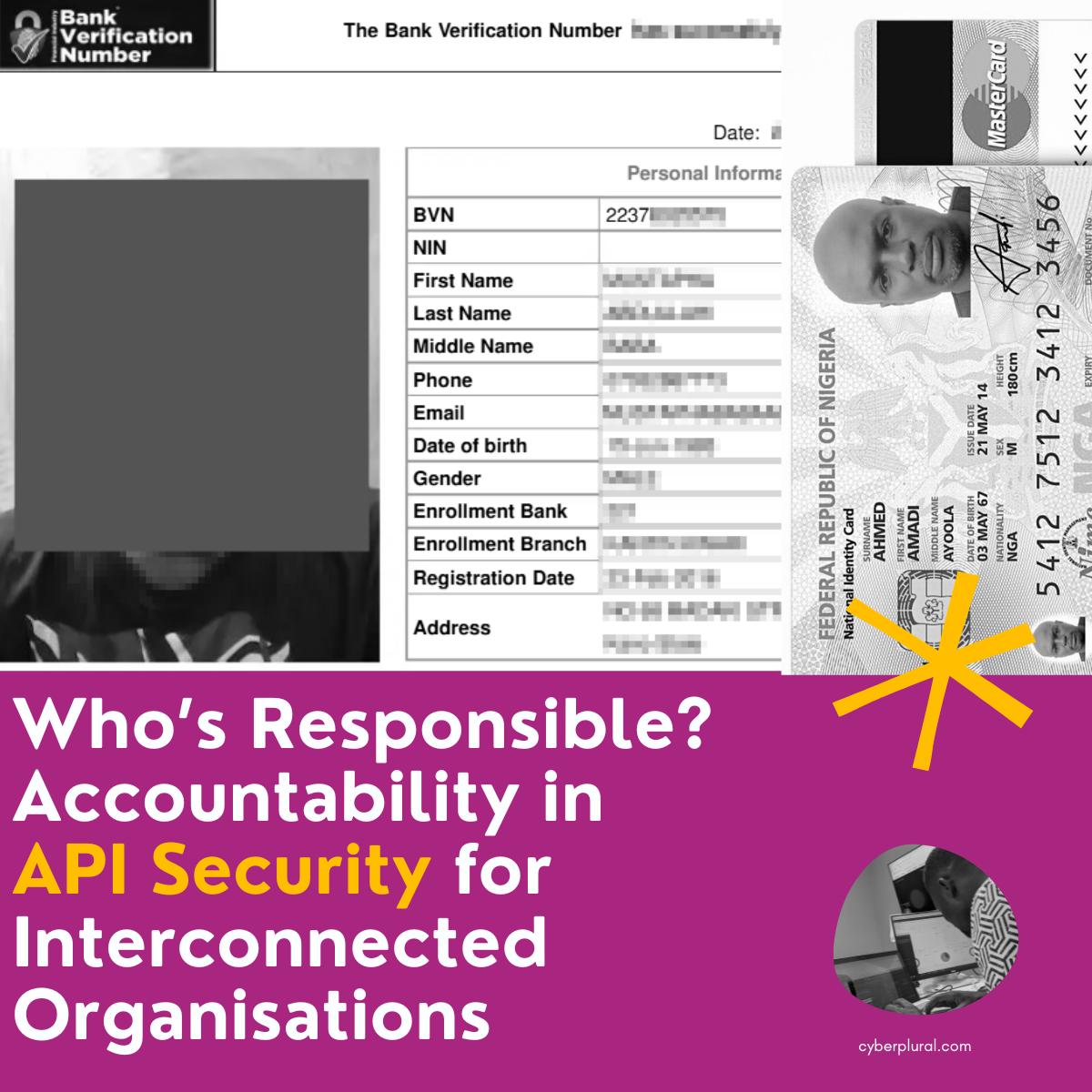
In our recent engagements focused on red teaming, threat intel and vulnerability management, we’ve observed a significant trend: organizations in the financial and government sectors are becoming increasingly interconnected. This growing reliance on data sharing—ranging from Bank Verification Numbers (BVN) and National Identification Numbers (NIN) to other sensitive information—highlights both the potential and the risks associated with this interconnectedness. As organizations work to harness the power of the digital economy and serve their customers without geographical barriers, the introduction of Application Programming Interfaces (APIs) with multiple endpoints has become essential. However, this raises critical questions about the security of these implementations and the controls necessary to protect against potential attacks targeting this infrastructure.
The Importance of APIs in Interconnected Systems
APIs are the backbone of modern digital services, enabling seamless communication between different systems and applications. They allow organizations to share data efficiently, enhancing customer experiences and facilitating new business models. For instance, financial institutions can access identity verification services in real time, while government agencies can streamline citizen services through shared data.
Use Cases for API Implementation
Some clear use cases for APIs in this interconnected landscape include:
- Identity Management: APIs enable organizations to verify identities quickly, reducing fraud and improving service delivery.
- Financial Transactions: Banks and financial institutions rely on APIs to process transactions securely and efficiently.
- Data Sharing: Organizations share sensitive data, such as BVN and NIN, to provide better services and insights.
However, the rapid deployment of APIs has also introduced new vulnerabilities that can be exploited by malicious actors.
The Security Risks of API Implementations
As organizations embrace APIs, they must also contend with various security challenges. Some of the most pressing issues include:
1. Broken Object Level Authorization (BOLA)
BOLA vulnerabilities occur when APIs do not properly validate user permissions for accessing specific objects. This can lead to unauthorized access to sensitive data, allowing attackers to view or manipulate records they should not have access to.
2. Insecure Direct Object References (IDOR)
IDOR vulnerabilities arise when APIs expose internal implementation objects to users, allowing them to access or modify data by manipulating input parameters. This can result in significant data breaches and unauthorized actions.
3. Misconfigurations
Common misconfigurations, such as the lack of rate limiting, can leave APIs open to abuse. Attackers can exploit these weaknesses to launch denial-of-service (DoS) attacks or brute-force attempts, potentially accessing millions of records.
4. Data Breaches and Financial Losses
In several documented cases, API vulnerabilities have been exploited to steal funds from affected organizations or gain unauthorized access to customer records. The consequences of these breaches can be severe, leading to financial losses, reputational damage, and regulatory penalties.
Accountability: Who Is Responsible?
As we delve deeper into these issues, a critical question arises: who is to blame for these vulnerabilities? Is it the developers who may overlook security best practices, the platform owners who fail to grasp the implications of API access, or the lack of oversight from API owners? This multifaceted issue requires a comprehensive approach to accountability and responsibility across all stakeholders involved in API development and management.
Looking Ahead: Join the Conversation
These pressing questions and more will be explored in our upcoming webinar and subsequent series of discussions. We invite you to join us as we dissect the complexities of API security, interconnectivity, and the responsibilities of organizations in safeguarding sensitive data.
Conclusion
The interconnectivity of organizations in the financial and government sectors offers immense potential for innovation and improved service delivery. However, it also presents significant security challenges that must be addressed proactively. By understanding the risks associated with API implementations and fostering a culture of accountability, organizations can better protect themselves and their customers in this rapidly evolving digital landscape. Join us in our upcoming discussions to learn more about how to navigate these challenges effectively.
Leave a Reply